Best Computer Games for Fans of Open-World Adventures
The allure of open-world gaming lies in its promise of absolute personal freedom. Unlike linear titles that shepherd players down narrow hallways with scripted set pieces, an open world hands you a compass, points toward a distant horizon, and leaves the journey entirely up to you. When executed with precision, these virtual worlds transcend simple interactive maps; they become living, reactive ecosystems filled with emergent stories, diverse cultures, ecological layers, and unexpected discoveries.
The personal computer platform remains the premier arena to experience these vast digital realms. Advanced graphics hardware, variable frame rates, ultrawide monitor support, and vibrant modding communities allow developers to push spatial scale and environmental density far beyond console baselines. Whether your preference leans toward gritty frontier realism, dark high-fantasy kingdoms, dense futuristic metropolises, or deep interstellar exploration, the PC library hosts some of the finest open-world adventures ever crafted.
The Pillars of a Compelling Open World
Building a vast digital playground requires far more than merely inflating landscape dimensions. A massive territory devoid of substance quickly becomes an empty walking simulator. The greatest open-world titles balance geographic scale with intricate environmental storytelling and mechanical depth.
Several core elements distinguish an unforgettable open world from a mediocre one:
-
Emergent Gameplay: Systems that interact with each other unpredictably. Weather patterns, non-player character schedules, wildlife food chains, and physics engines must collide naturally to create unique player stories without pre-scripted designer cues.
-
Environmental Storytelling: Ancient ruins, abandoned homesteads, scattered diaries, and battlefield debris that reveal past events through visual context alone, rewarding curious explorers who wander off the beaten path.
-
Organic Traversal: Movement across the terrain must feel engaging in its own right. Whether riding a mount, mastering a grappling hook, driving a vehicle, or managing foot stamina over jagged peaks, traversal should never feel like passive downtime.
-
Meaningful Progression: Discovering hidden caves or remote outposts must grant tangible rewards, such as deep lore, rare crafting materials, unique weapons, or vital character abilities, rather than arbitrary checklist markers.
Living Frontiers and Historical Simulation
Creating a grounded, authentic historical setting requires extraordinary attention to environmental detail, human routines, and cultural atmosphere.
Red Dead Redemption 2
Rockstar Games achieved a milestone in digital world design with Red Dead Redemption 2. Set against the backdrop of an industrializing American frontier at the end of the nineteenth century, the game creates an astonishingly detailed ecosystem. Wildlife follows biological hunting routines, mud gathers dynamically on clothing and carriage wheels, and townspeople adhere to complex day-and-night work schedules.
Players take the role of Arthur Morgan, an outlaw operating within a vanishing frontier gang. What elevates this world is its deliberate pacing. Hunting wild game requires scent masks and wind awareness; weapons must be cleaned manually to avoid jamming; horses must be groomed and fed to build trust. It is a slow, tactile experience that pulls you directly into the daily grit of frontier life, making every campfire and mountain vista feel earned.
Kingdom Come: Deliverance
For players who reject high fantasy tropes in favor of strict historical authenticity, Kingdom Come: Deliverance offers an uncompromising depiction of fifteenth-century Bohemia. There are no fireballs, magical creatures, or glowing legendary swords. Instead, players inhabit the muddy boots of Henry, the illiterate son of a village blacksmith thrust into a brutal civil war.
The game world operates on realistic physical rules. If you do not bathe regularly, noble characters will refuse to converse with your grimy avatar; food spoils in your pouch over time; armor must be maintained with repair kits; combat requires directional sword positioning and stamina pacing based on historical fencing manuals. Its dense European forests, rolling agricultural meadows, and meticulously recreated medieval castles provide an atmospheric immersion rarely matched in the genre.
High Fantasy and Grim Dark Mythology
Fantasy realms allow world designers to break free from earthly physical constraints, building colossal vertical spires, mystical subterranean networks, and environments shaped by ancient cataclysms.
The Witcher 3: Wild Hunt
CD Projekt Red transformed narrative-driven open-world design with The Witcher 3: Wild Hunt. Taking place across the war-torn Northern Realms, the game world is defined by moral ambiguity, folklore horror, and raw human struggle. The wind howling through birch forests, the mud-slick streets of peasant hamlets, and the canals of the city of Novigrad create an unforgettable backdrop.
The true genius of this world lies in its quest writing. In most role-playing titles, secondary side quests act as repetitive fetch chores. In The Witcher 3, a seemingly minor monster contract frequently unravels into a tragic domestic drama or a complex political intrigue where there are no clear heroic outcomes. Exploring the wind-swept archipelago of Skellige or the bogs of Velen rewards players with dark, memorable character interactions at every crossroads.
Elden Ring
FromSoftware redefined modern open-world philosophy by throwing out modern navigational conventions. Elden Ring features no mini-map dotted with hundreds of icons, no compass clutter indicating undiscovered points of interest, and no artificial level-gating barriers. The Lands Between invites players to rely entirely on visual landmarks and curiosity.
If you spot a massive, ruined castle towering on a distant cliff, you can find a way to reach it. The world is structured with layered vertical complexity, hiding vast underground cities, subterranean rivers, and forgotten cathedrals beneath its surface. Traversal atop the spectral steed Torrent feels fluid and responsive, allowing players to disengage from overwhelming field bosses to scout alternative pathways. By trusting the player intelligence and intuition, Elden Ring delivers an unmatched sense of genuine discovery.
Sci-Fi Dystopias and Cosmic Frontiers
Science fiction transports the open-world formula into the far future, exploring advanced cybernetic societies, post-apocalyptic ruins, and the boundless vacuum of space.
Cyberpunk 2077
Set in the sprawling California free city of Night City, Cyberpunk 2077 showcases unmatched architectural density and vertical urban scale on PC. Towering skyscrapers wrapped in neon advertisements cast deep shadows over crowded street markets, while industrial outskirts give way to sun-bleached desert wastes.
With advanced ray tracing and path tracing technologies enabled on modern graphics hardware, Night City becomes an extraordinary visual playground. The world pulses with corporate excess, gang warfare, and underground subcultures. Driving through the crowded avenues of Watson or the neglected slums of Pacifica in customized vehicles, accompanied by diverse radio stations, delivers a sensory overload that captures the gritty soul of classic cyberpunk literature.
No Man’s Sky
For those whose appetite for exploration cannot be contained within a single planetary surface, No Man’s Sky provides an entire universe generated through complex mathematical algorithms. Players begin as stranded travelers on a random border planet and steadily gather resources to repair their starship before venturing toward the galactic core.
The game standout technical achievement is seamless planetary transit. You can launch your vessel from a lush alien meadow, punch through the planetary atmosphere, enter deep orbital space, navigate through asteroid belts, and land on a completely uncharted frozen moon with zero loading screens. Continuous post-launch updates have expanded the experience with deep base-building mechanics, deep-sea exploration, alien fleet management, and dynamic space combat, turning it into the definitive cosmic exploration sandbox.
Post-Apocalyptic Survival Landscapes
Ruined worlds force players to view the environment through the lens of pure survival, balancing exploration risks against basic biological necessities.
Fallout: New Vegas
While modern post-apocalyptic titles offer higher graphical fidelity, Obsidian Entertainment’s Fallout: New Vegas remains the gold standard for player agency and factional warfare within an open world. Set in the Mojave Wasteland following a devastating nuclear exchange, the game drops players into the middle of a power struggle for control of Hoover Dam and the Las Vegas Strip.
The Mojave is packed with unique tribal settlements, mutated wildlife, pre-war vaults, and competing factions, from the democratic New California Republic to the autocratic Caesar’s Legion. What makes the world special is its deep reactivity; nearly every faction can be allied with, betrayed, or eliminated entirely. The game never forces you down an arbitrary path, allowing your character personal ethics and dialogue skills to shape the balance of political power across the wasteland.
How to Optimize Your PC for Sprawling Open Worlds
Open-world games place tremendous simultaneous demands on both your graphics processing unit and your central processing unit. The CPU must continuously calculate non-player character pathfinding, physics interactions, and streaming asset coordinates, while the GPU renders complex geometry, high-resolution textures, and dynamic lighting systems.
To ensure smooth frame rates and eliminate jarring stuttering:
-
Install Exclusively on Fast Solid-State Drives: Never install modern open-world games on mechanical hard drives. Rapid open-world asset streaming requires the high read and write speeds of modern NVMe solid-state storage to prevent sudden texture pop-in and travel hitching.
-
Calibrate Field of View Settings: Increasing your field of view widens peripheral vision, reducing motion sickness during long exploration sessions. However, extremely wide angles force the engine to render significantly more geometry simultaneously, impacting your frame rates.
-
Leverage Intelligent Resolution Scaling: Utilize performance technologies like DLSS, FSR, or XeSS. These neural upscalers render the game at a lower internal resolution before reconstructing a clean, sharp image, dramatically improving frame rates in asset-heavy open environments.
Frequently Asked Questions
What is the difference between an open-world game and a sandbox game?
An open-world game refers primarily to spatial design: a continuous, non-linear environment without artificial loading walls separating areas. A sandbox game refers to mechanical systems: a game that provides players with tools, physics objects, and environmental variables to manipulate the world freely, often without rigid narrative objectives. Many modern titles, such as Grand Theft Auto, blend both concepts by featuring a large open map alongside expansive sandbox mechanics.
Why do modern open-world games cause significant frame drops in crowded cities compared to wilderness zones?
Crowded urban zones place intense computational strain on the central processing unit rather than just the graphics card. In a dense city, the processor must track hundreds of independent non-player character artificial intelligence routines, vehicle pathfinding trajectories, localized sound sources, and environmental collision meshes simultaneously. Out in open wilderness zones, the processor manages far fewer moving dynamic entities, resulting in smoother frame pacing.
How does modding enhance the lifespan of open-world computer games?
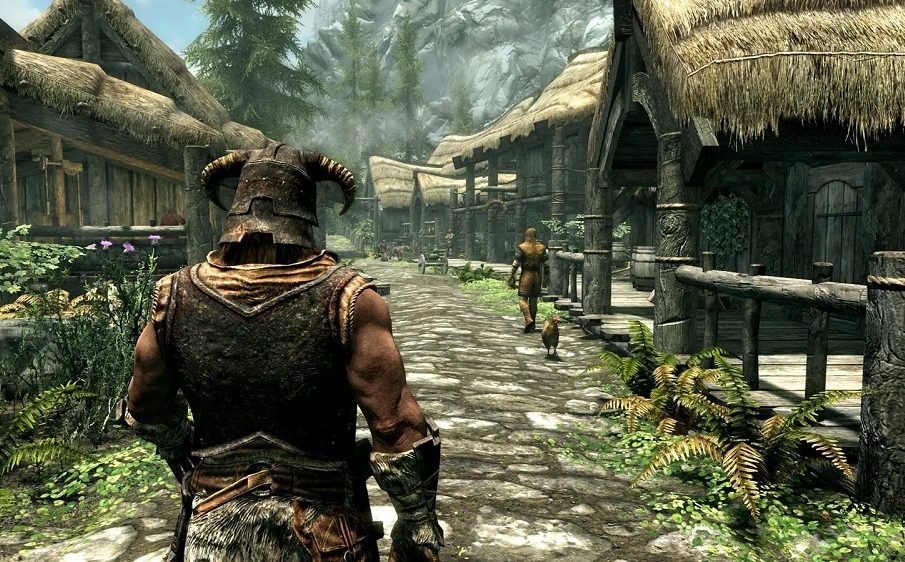
The PC modding community adds decades of longevity to open-world adventures. Modders fix lingering engine bugs, update older texture files to modern resolutions, overhaul artificial intelligence routines, add entirely new lands, and introduce quality-of-life adjustments that original developers never implemented. Games like The Elder Scrolls V: Skyrim and Fallout remain heavily played today largely due to thousands of free, community-created expansions.
What is texture pop-in, and how can it be minimized in open-world PC titles?
Texture pop-in occurs when the game engine cannot load high-resolution assets into video memory quickly enough as you move through space, causing blurry or low-polygon objects to suddenly snap into high detail right in front of your eyes. You can minimize this by installing games on high-speed NVMe solid-state drives, increasing draw distance or level-of-detail settings in the options menu, and ensuring your graphics card has sufficient video random access memory to hold large texture packs.
Are open-world games suitable for players with limited weekly free time?
Open-world games can be challenging for time-constrained players due to their massive scale and travel requirements. However, titles that feature robust manual save systems, fast-travel networks, and short self-contained side quests can be enjoyed in thirty to forty-five minute bursts. Avoid games that rely on punishing survival mechanics or lack frequent checkpointing if your weekly gaming time is restricted.
What is dynamic level scaling, and why is it controversial among open-world fans?
Dynamic level scaling automatically adjusts enemy health, damage, and equipment to match the current level of the player character. Proponents argue it prevents the game from becoming boringly easy and keeps every map sector challenging. Opponents dislike level scaling because it destroys the feeling of organic character progression; leveling up no longer feels rewarding if a simple roadside bandit scales up to become just as difficult to defeat at level fifty as they were at level one.