
The Most Memorable Features of Classic Flash Games
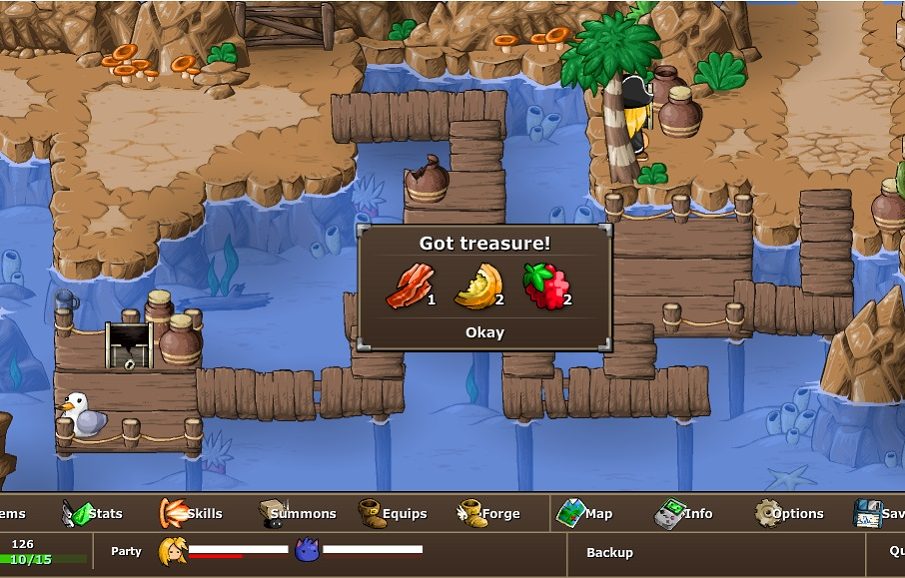
Long before digital storefronts, multi-gigabyte day-one patches, and mandatory platform launchers dominated personal computer entertainment, the web was home to a vibrant, freewheeling creative playground. For millions of school-age children, college students, and office workers in the late nineteen-nineties and two-thousands, launching an adventure required nothing more than opening a browser window, navigating to a web portal, and waiting for a progress bar to load.
Powered by Macromedia and later Adobe Flash, this era represented a golden age of democratic game development. Classic Flash games were rough around the edges, occasionally absurd, and constantly defying commercial conventions. They served as an incubator for experimental design concepts that would later reshape mainstream mobile gaming, indie computer gaming, and online social platforms. Looking back at this golden age reveals the distinct mechanical, visual, and cultural features that cemented classic Flash games in the collective memory of an entire internet generation.
Instantaneous Access and the Vanishing Barrier to Entry
The defining hallmark of classic Flash games was their absolute, friction-free accessibility. At a time when physical retail discs required installation wizard setups, graphics card compatibility checks, and manual software patches, Flash operated directly inside a web browser with zero installation friction.
The mechanics of browser play created an unmatched culture of immediacy:
-
Click-and-Play Simplicity: A user clicked a hyperlink or bookmarked a portal, waited thirty seconds for a compressed file to load over dial-up or early broadband, and was playing immediately.
-
Universal Hardware Compatibility: Because Flash executed its code within a browser plugin, the games ran consistently across different computer hardware, operating systems, and monitor resolutions without requiring dedicated graphics cards.
-
Sneak-and-Play Cultural Status: The instant-loading nature of browser games made them a staple in high school computer labs and office cubicles. Games frequently featured built-in boss keys that instantly swapped the screen to a fake spreadsheet when a teacher or manager walked past.
-
Total Absence of Paywalls: The overwhelming majority of classic Flash games were entirely free to experience. Players enjoyed complete gaming experiences without credit cards, mandatory user accounts, or aggressive pop-up monetization schemes.
This frictionless delivery meant players could test a dozen different interactive concepts in a single lunch break, creating a culture of constant, low-risk digital sampling.
Distinctive Vector Art Styles and Hand-Drawn Charm
Before modern mobile app stores introduced generic asset store packs and cookie-cutter interfaces, Flash games boasted an unmistakable visual aesthetic dictated by the technology itself. Flash was fundamentally built around vector illustration, which stored shapes as mathematical coordinates rather than fixed pixel grids.
Vector technology shaped the artistic identity of the platform:
-
Clean Lines and Infinite Scalability: Vector art could scale to fill large desktop screens without pixelation or quality loss while keeping file sizes small.
-
Hand-Drawn Indie Imperfections: Solo creators drew characters, environments, and typography directly using digital tablets or basic computer mice, infusing titles with idiosyncratic sketchbook styles.
-
Fluid Keyframe Tweening: The Flash animation suite allowed developers to set motion endpoints, letting the software interpolate intermediate frames. This yielded bouncy, elastic limb animations seen in beloved titles like The Fancy Pants Adventures and Alien Hominid.
-
Atmospheric Minimalism: Many developers leveraged technical limitations into stylistic choices. Games like N utilized crisp stick-figure silhouettes, simple black-and-white vector geometry, and particle physics, proving that compelling gameplay did not require dense textures.
This visual identity felt authentic, homemade, and personal, standing in stark contrast to the sterile, commercial corporate polish of big-budget studio releases.
Unfiltered Creative Experimentation and Genre Pioneering
Because Flash titles were developed by individual hobbyists, students, and indie duos working out of bedrooms rather than boardrooms, creators had zero corporate oversight. There were no marketing executives demanding demographic studies, focus testing, or seasonal monetization roadmaps. This artistic freedom made the Flash ecosystem the primary testing ground for innovative game design.
Many genres that dominate modern mobile and indie computer gaming trace their origins directly to the Flash incubator:
-
Physics-Based Sandboxes: Titles like Line Rider, Fantastic Contraption, and Crush the Castle turned emergent Newtonian physics, gravity curves, and trajectory planning into viral sensations, laying the direct mechanical groundwork for modern games like Angry Birds.
-
Tower Defense Evolution: While early tower defense games originated as custom strategy mods, Flash creators refined and popularized the genre for casual audiences through titles like Bloons Tower Defense and GemCraft.
-
Crude Subversive Comedy: Unconstrained by retail ratings boards, creators leaned into dark humor, irreverent parodies, and cartoon gore. Titles like Happy Wheels and the Henry Stickmin series combined slapstick violence with interactive branching logic.
-
Narrative Micro-Games and Art Pieces: Developers used Flash to build moody, emotionally resonant experiences that explored existential themes, personal grief, and atmospheric puzzles in ten-minute vignettes, pioneering what the industry would later term narrative walking simulators.
Creators built games simply to see if a bizarre concept worked. If an idea failed, the developer lost only a weekend of coding; if it succeeded, it spread across the globe within hours.
Hyper-Addictive Upgrade Loops and Incremental Progression
While early Flash titles were brief physics experiments or simple obstacle courses, developers quickly realized that adding layered progression loops drastically improved player retention. Flash games perfected the satisfying loop of failure, currency accumulation, incremental upgrades, and triumphant breakthroughs.
This mechanic was best demonstrated in the launch subgenre, popularized by games like Learn to Fly, Toss the Turtle, and Shopping Cart Hero. In these games, the player launched an avatar down a ramp with minimal starting propulsion, traveling a short distance before crashing. The distance traveled awarded in-game coins, which were spent to purchase rocket boosters, aerodynamic gliders, fuel tanks, and bounce upgrades.
Each run pushed the player slightly further across the landscape, triggering a dopamine loop that kept players hooked for hours. This addictive upgrade philosophy eventually migrated to mobile app stores, serving as the foundational DNA for modern idle clickers, endless runners, and roguelite progression systems.
The Era of Community Hubs and Content Portals
A major reason classic Flash games remain so memorable is the communal environment in which they were discovered. Flash games did not exist in isolated storefront vacuums; they thrived across centralized web portals that felt like digital amusement parks.
Websites like Newgrounds, Kongregate, Armor Games, and Miniclip operated as social hubs. Newgrounds introduced the legendary automated portal system, where users voted on community submissions in real time, determining whether an amateur project survived or was purged from the platform. Kongregate integrated site-wide achievement badges, unified player levels, and live chat rooms alongside game windows, turning single-player browser games into collective social experiences.
These portals built a direct bridge between creators and players. A middle-school student could leave a review on an action game, receive a response from the solo programmer an hour later, and see their feedback incorporated into an update the following week. This culture of community collaboration fostered lifelong friendships, launched professional game development studios, and established an open, participatory digital community.
Sound Design: Spliced Music Tracks and Stock Audio
Beyond graphics and gameplay, classic Flash games possessed an unmistakable audio texture. Due to strict file size limits intended to facilitate fast loading, developers could not include extensive orchestral scores or uncompressed voice recordings.
Instead, creators relied on compressed audio loops, user-submitted tracks from platforms like the Newgrounds Audio Portal, and royalty-free stock sound libraries. Memorable, punchy electronica and metal loops played continuously over high-speed platformers, engraving their melodies into players’ memories through dozens of repeated runs. Distinctive sound effects, such as the squishy crunch of a stick-figure collision or the metallic click of a weapon reload, were reused across hundreds of titles, becoming an audio shorthand that instantly transports former players back to the early days of the web.
Frequently Asked Questions
Why did Adobe shut down the Flash Player plugin, and when did it happen?
Adobe officially discontinued Flash Player on January 1, 2021, and began blocking Flash content from running in the player on January 12, 2021. The decision followed years of mounting security concerns, performance limitations, high battery consumption on portable devices, and the rise of modern open web standards like HTML5, WebGL, and WebAssembly. Tech companies and major browser developers phased out plugin support to create a safer, faster, and more unified web environment.
How are classic Flash games preserved and played today after the death of the plugin?
The historical catalog of Flash games is preserved through dedicated open-source community initiatives. Projects like the Flashpoint Archive have digitally preserved over one hundred thousand web games and animations in offline, sandboxed launcher packages. Furthermore, emulators like Ruffle, written in the Rust programming language, emulate Flash directly in modern web browsers and desktop applications without requiring the insecure original Adobe plugin.
Which mainstream, commercially successful video game franchises started as Flash projects?
Numerous prominent commercial titles began their lives as free browser games on Flash portals. Super Meat Boy evolved directly from the Flash game Meat Boy; The Binding of Isaac was originally prototyped and released in Flash; Alien Hominid transitioned from Newgrounds to commercial home consoles; and the Bloons series grew from a modest dart-and-balloon puzzle into a major cross-platform franchise.
What was ActionScript, and how did it influence early web game development?
ActionScript was the proprietary object-oriented programming language utilized within the Adobe Flash authoring environment. It evolved from basic navigation button commands into a complete, robust scripting language with the release of ActionScript 3.0. ActionScript allowed amateur developers and animators to attach complex physics calculations, artificial intelligence routines, inventory logic, and interactive mechanics directly to visual vector symbols on a timeline.
What was the difference between playing games on Flash versus early Java applets?
Java applets were widely used for web games in the mid-to-late nineteen-nineties, but they suffered from slow load times, frequent browser crashes, clunky user interface integration, and high system resource usage. Flash provided superior timeline-based 2D vector animations, smaller compiled file sizes, and smoother multimedia playback. The ubiquitous pre-installation of the lightweight Flash Player plugin on consumer PCs allowed Flash to decisively surpass Java as the premier engine for interactive web entertainment.
Why did Steve Jobs famously refuse to allow Flash onto Apple iOS devices like the iPhone?
In April 2010, Apple CEO Steve Jobs published his famous public letter titled Thoughts on Flash. He cited multiple reasons for banning the plugin from iPhones and iPads, including severe security vulnerabilities, poor battery management, lack of touch-screen design compatibility, crash-prone architecture, and Apple’s desire to prevent a third-party development layer from sitting between application creators and iOS hardware capabilities. This decision accelerated the broader industry transition toward native mobile apps and open web standards.