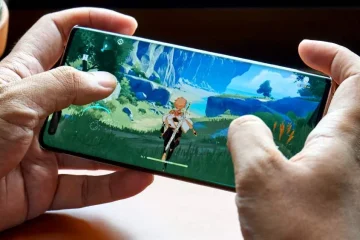
The Rise of Casual Gaming on Android Devices

Video games were once confined to dedicated consoles, specialized desktop computers, and noisy physical arcades. Engaging with interactive entertainment required substantial upfront hardware investments, dedicated blocks of free time, and a willingness to master complicated controller schemes. For decades, this dynamic separated self-identified core gamers from the broader public, who viewed video gaming as a time-consuming subculture rather than a mainstream pastime.
The global spread of the Android mobile operating system has dismantled those barriers. Today, digital gaming is no longer restricted to living room television screens or high-end monitors. It happens in airport boarding lounges, during subway commutes, on living room couches, and in doctor office waiting rooms. Casual games, designed with approachable mechanics, intuitive touch controls, and brief play cycles, represent the driving force behind this digital transformation. Powered by the immense reach of the Android open ecosystem, casual gaming has turned the smartphone into the most ubiquitous entertainment device on the planet.
Defining the Casual Gaming Experience
To appreciate the rapid growth of this medium, one must examine what defines a casual game. Unlike core gaming genres that demand steep learning curves, hours of continuous narrative investment, and precise multi-button execution, casual titles focus on immediate accessibility.
At its core, casual gaming is defined by several design characteristics:
-
Frictionless Mechanics: Gameplay typically relies on basic touch gestures, such as single-finger taps, dragging items across a grid, or swiping to steer. Players understand the primary objective within five seconds of launching the application.
-
Bite-Sized Sessions: Levels are engineered to be completed in two to five minutes. This micro-session design respects the player schedule, allowing users to make meaningful progress during brief daily breaks.
-
Low Penalty Failure: Losing a round rarely results in frustrating setbacks. Players can restart a puzzle instantly, maintaining a relaxed, low-stress environment that encourages continuous play.
-
Gradual Difficulty Progression: Early stages introduce basic rules gently, while subsequent levels weave in layered mechanics that provide satisfying cognitive challenges without overwhelming the user.
These titles span diverse subgenres, including tile-matching puzzles, endless runners, word games, hidden-object mysteries, simple farming simulations, and physics-based challenges. By stripping away complex lore and complicated control schemes, casual titles appeal directly to universal human problem-solving instincts.
The Global Reach of the Android Ecosystem
While mobile gaming flourishes across various platforms, Android occupies an unmatched position in terms of global scale. Android powers over seventy percent of the world active smartphones, driven by an open-source architecture that spans hundreds of hardware manufacturers across every continent.
This hardware diversity plays an essential role in the rise of casual titles:
-
Democratization of Hardware: Dedicated high-end gaming laptops and consoles cost hundreds or thousands of dollars. Android spans a vast price spectrum, offering functional touchscreen devices starting under one hundred dollars.
-
Modest Hardware Demands: Core mobile games require multi-core processors, active cooling, and massive graphic processing units. Casual games rely on efficient two-dimensional engines or lightweight three-dimensional graphics that run smoothly on budget chipsets and older silicon.
-
Emerging Market Penetration: In developing regions across Southeast Asia, Latin America, and Africa, an Android smartphone is frequently an individual sole personal computing device and primary connection to the internet. In these regions, casual games serve as the primary gateway to interactive digital entertainment.
-
Universal Screen Accessibility: Whether played on a compact five-inch budget smartphone, a premium high-refresh-rate flagship, or a ten-inch Android tablet, casual games scale their interface layouts cleanly across varying aspect ratios and resolutions.
By lowering the financial and physical barriers to entry, Android transformed billions of people who never intended to purchase a video game console into active daily gamers.
Demographics and the Changing Face of Gamers
The explosive expansion of casual gaming on Android has permanently redefined player demographics. The historical marketing stereotype of the video game consumer, predominantly teenage and young adult males, has been replaced by a balanced, multigenerational audience.
Surveys across mobile app marketplaces reveal that women represent more than half of active casual mobile gamers. Match-three titles, word puzzles, and design simulation games often maintain large female player bases that value relaxation, creative expression, and mental stimulation during quiet personal windows.
Furthermore, casual Android games have achieved historic adoption among older demographics. Older adults and retirees who never interacted with traditional desktop or console games have embraced digital crosswords, card games, and spatial puzzles on touchscreen tablets. Touch displays eliminate the coordination hurdle of using a mechanical mouse or dual-analog controller, making direct physical touch an intuitive interaction for individuals of any age. For older users, these applications provide cognitive exercise, memory preservation, and accessible daily entertainment.
The Evolution of Monetization and Freemium Economics
The meteoric rise of casual gaming on Android is inextricably linked to the evolution of the free-to-play business framework. In the early days of personal software, users paid an upfront fee to download a program. That upfront financial barrier discouraged millions of casual smartphone owners from experimenting with unfamiliar titles.
The freemium model removed that initial friction entirely. Users download games at zero cost, testing the experience within seconds. Developers instead generate revenue through subtle, multi-tiered monetization strategies:
-
Rewarded Video Advertisements: Rather than interrupting gameplay with jarring commercials, modern casual games offer players voluntary exchanges. Users choose to watch a thirty-second video advertisement in return for an extra life, bonus currency, or an in-game hint. This system aligns player incentives with developer revenue without requiring direct cash outlays.
-
Micro-Transactions and Boosters: Players facing a challenging puzzle stage can spend ninety-nine cents to purchase extra moves or specific power-up tools to clear stubborn obstacles. While the vast majority of players navigate titles without spending real money, a dedicated percentage makes recurring micro-purchases that fund continuous game development.
-
Hybrid Monetization: Progressive casual titles merge subtle display banners, opt-in rewarded ads, and small cosmetic purchases, ensuring the application monetizes every segment of its player base sustainably.
-
Play Pass and Subscription Bundles: Google Play Pass and third-party subscription offerings allow users to pay a predictable monthly fee to enjoy hundreds of popular casual titles completely free of third-party advertisements and in-app paywalls.
This economic foundation created a self-sustaining cycle: zero-cost downloads draw massive audiences, advertising revenue funds free-tier players, and micro-transactions capture discretionary spending from dedicated enthusiasts.
The Rise of Hyper-Casual and Hybrid-Casual Innovations
As the mobile audience grew, developer studios began streamlining game design even further, giving birth to the hyper-casual movement. Hyper-casual titles stripped away menus, tutorials, narrative pretense, and complex progression trees, delivering ultra-simple mechanics like timing a single tap to bounce a ball or sliding a finger to navigate a character down a colorful obstacle track.
Hyper-casual games relied on minimal file download sizes and instant gratification, turning them into viral sensations across digital download charts. However, players frequently abandoned these simple titles after a few days, forcing developers to continuously acquire new users at high marketing costs.
This retention challenge prompted the modern evolution into hybrid-casual design. Hybrid-casual titles retain the hyper-accessible, intuitive core mechanics that make games easy to pick up, but layer in deeper meta-systems:
-
Narrative storylines where clearing puzzles restores an overgrown garden or decorates a virtual estate.
-
Collection mechanics that reward players with collectible character cards, pets, or vehicle skins.
-
Social leaderboards and competitive guild tournaments that allow friends to pool achievements and exchange daily energy gifts.
By uniting the instant appeal of hyper-casual mechanics with the long-term progression systems of mid-core titles, hybrid-casual games on Android achieve strong retention rates and sustained commercial vitality.
Frequently Asked Questions
What is the difference between casual games and hyper-casual games?
Casual games feature simple mechanics paired with established progression loops, narrative themes, and moderate session lengths, such as match-three titles with hundreds of progressive puzzle chapters. Hyper-casual games strip away almost all secondary progression, focusing on a single core action with minimal menus and short play cycles. Hyper-casual titles are designed for instant play and typically rely heavily on advertising for monetization, whereas standard casual games balance advertisements with long-term in-app purchase systems.
Can most Android casual games be played without an active internet connection?
Many single-player Android casual games, such as traditional solitaire, logic grid puzzles, and classic match games, function offline without requiring continuous mobile data or wireless internet. However, an internet connection is typically required to download new level packs, sync player progress to cloud profiles, view optional rewarded video advertisements, or participate in live multiplayer events and community leaderboards.
How do Google Play Instant apps benefit casual gamers on Android?
Google Play Instant technology allows users to launch and test core gameplay mechanics directly from the digital storefront or a web link without waiting for a full application download or install sequence. This provides a zero-commitment trial experience, allowing players to verify whether they enjoy the game performance and design before dedicating local device storage space to the full application.
Do casual games on Android pose significant battery drain or overheating risks?
Because the vast majority of casual titles utilize lightweight visual assets, optimized frame rates, and modest processing overhead, their impact on modern smartphone battery life is minimal compared to demanding three-dimensional competitive titles. However, casual applications that run heavy third-party ad mediation networks or unoptimized visual effects can lead to moderate battery consumption and slight warmth during extended play sessions.
What accessibility features make Android a welcoming platform for casual gaming?
The Android operating system includes native accessibility tools, such as system-wide screen magnification, high-contrast text modes, color correction filters for color vision deficiencies, and customizable touch-and-hold delays. In addition, many casual developers build one-handed portrait mode layouts, large high-contrast interactive buttons, and gentle audio cues directly into their titles, making them comfortable for players with diverse physical and sensory requirements.
Are children protected from accidental in-app purchases while playing casual games on Android?
Android and the Google Play Store provide robust parental control settings to prevent unauthorized purchases. Account holders can require biometric authentication, such as a fingerprint scan or facial recognition, or mandate a personal identification number before any digital transaction is authorized. Furthermore, family-oriented games participating in designed-for-families programs must adhere to strict advertising content guidelines and privacy protections.